

Introduction to construction payment deductions
In the construction industry, payments are not always straightforward. Contractors are responsible for deducting a percentage from subcontractor payments and passing that amount on to the authorities. These deductions act as advance tax payments and are later offset against the subcontractor’s overall tax liability.
The CIS Construction system was designed to improve transparency, reduce tax avoidance, and ensure that everyone contributes fairly. Understanding how deductions are calculated helps businesses plan finances more accurately and avoid unexpected liabilities.
Who the deduction rules apply to
Deductions apply when a contractor pays a subcontractor for construction-related work. This includes activities such as site preparation, building, repairs, alterations, and demolition. Whether you are a sole trader, partnership, or limited company, the deduction rules can apply depending on your role in the supply chain.
Under CIS Construction, contractors must assess each subcontractor’s status before making any payments. This ensures the correct deduction rate is applied from the very first invoice.
How deduction rates are determined
Deduction rates depend on the subcontractor’s registration and compliance status. Generally, there are three possible outcomes:
-
Standard rate deduction applied to registered subcontractors
-
Higher rate deduction applied when a subcontractor is not registered
-
Gross payment status, where no deduction is made
Within CIS Construction, these rates exist to reward compliant businesses while discouraging non-registration and poor record keeping.
Subcontractor verification process
Before paying a subcontractor, contractors must verify them through the official verification process. This step confirms whether the subcontractor is registered and which deduction rate applies.
Verification is a core requirement of CIS Construction, and skipping it can result in applying the wrong rate. Incorrect verification often leads to disputes, penalties, or delays when subcontractors try to reclaim over-deducted amounts.
What parts of a payment are deducted
Not all invoice amounts are subject to deductions. Typically, deductions are calculated on the labour portion only. Costs for materials, equipment hire, fuel, or certain travel expenses are usually excluded.
Under CIS Construction, correctly separating labour from materials on invoices is crucial. Poorly itemised invoices can result in higher deductions than necessary, which negatively affects subcontractor cash flow.
Gross vs net payments explained
Some subcontractors qualify for gross payment status, meaning they receive full payment without any deductions. This status is usually granted to businesses with strong compliance histories and consistent tax record keeping.
Within CIS Construction, gross status is a sign of reliability and financial discipline. However, losing this status can happen quickly if filing deadlines are missed or tax obligations fall behind.
Example of a deduction calculation
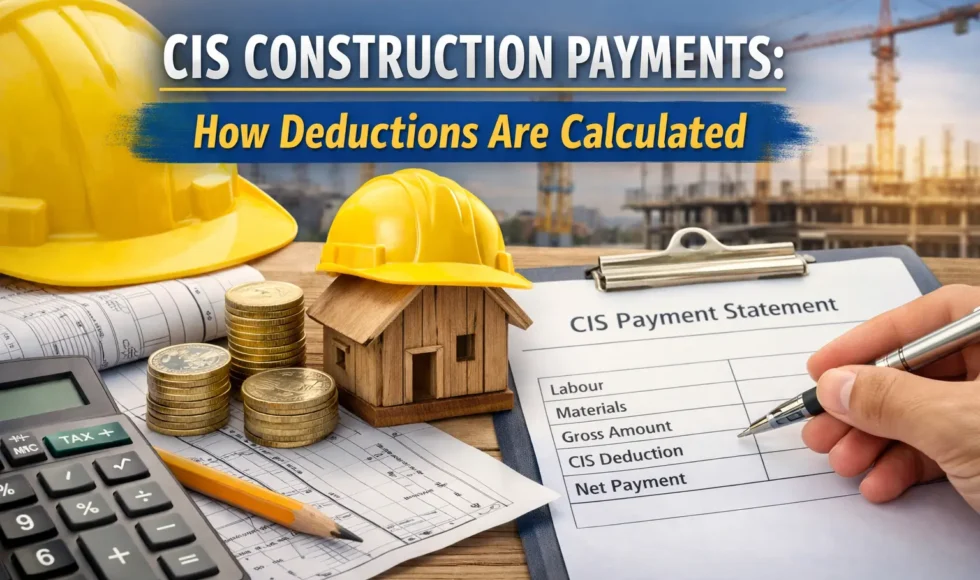
Consider a subcontractor invoice that includes labour and materials. Only the labour portion is used to calculate the deduction. The contractor applies the verified rate and deducts that amount before making payment.
This practical approach within CIS Construction ensures tax is collected gradually rather than in one large sum at year end, reducing financial pressure on subcontractors.
Record keeping and reporting responsibilities
Accurate records are essential for both parties. Contractors must submit monthly reports detailing payments and deductions made. Subcontractors should retain statements and payment summaries for their own accounts.
Effective record keeping is a foundation of CIS Construction compliance and helps resolve disputes quickly if figures are ever questioned.
Common mistakes that lead to incorrect deductions
Many deduction problems arise from simple errors, such as failing to verify subcontractors, deducting from the wrong invoice amounts, or missing reporting deadlines. These mistakes can trigger penalties and damage professional relationships.
Avoiding these issues within CIS Construction starts with understanding the rules and implementing consistent internal processes.
Best practices for staying compliant
To stay compliant, contractors should verify subcontractors early, review invoices carefully, and submit reports on time. Subcontractors should ensure registration details are correct and maintain clear financial records.
Following best practices under CIS Construction not only reduces risk but also builds trust between contractors and subcontractors.
Frequently Asked Questions (FAQ)
How are deductions calculated on labour-only invoices?
Deductions are applied to the full labour amount shown on the invoice, using the verified deduction rate. Under CIS Construction, materials are excluded, so labour-only invoices are straightforward to calculate.
Can subcontractors reclaim deducted amounts?
Yes. Deductions count as advance tax payments and are offset against final tax liabilities. Accurate records make reclaiming much easier.
What happens if a contractor applies the wrong rate?
Applying the wrong rate can lead to penalties or the need for corrections in future reports. This is why verification is essential before any payment is made.
Do deductions affect subcontractor cash flow?
Yes. Deductions reduce immediate payment amounts, which is why understanding calculations and maintaining eligibility for lower rates or gross status is important.
How often must deductions be reported?
Contractors must submit monthly reports detailing payments and deductions made during that period.
Final thoughts
Understanding how deductions are calculated is vital for smooth financial management in the construction sector. With clear verification, accurate invoicing, and consistent reporting, both contractors and subcontractors can avoid unnecessary issues and maintain healthy working relationships. Mastering these processes ensures long-term compliance, financial stability, and confidence in every payment cycle.